

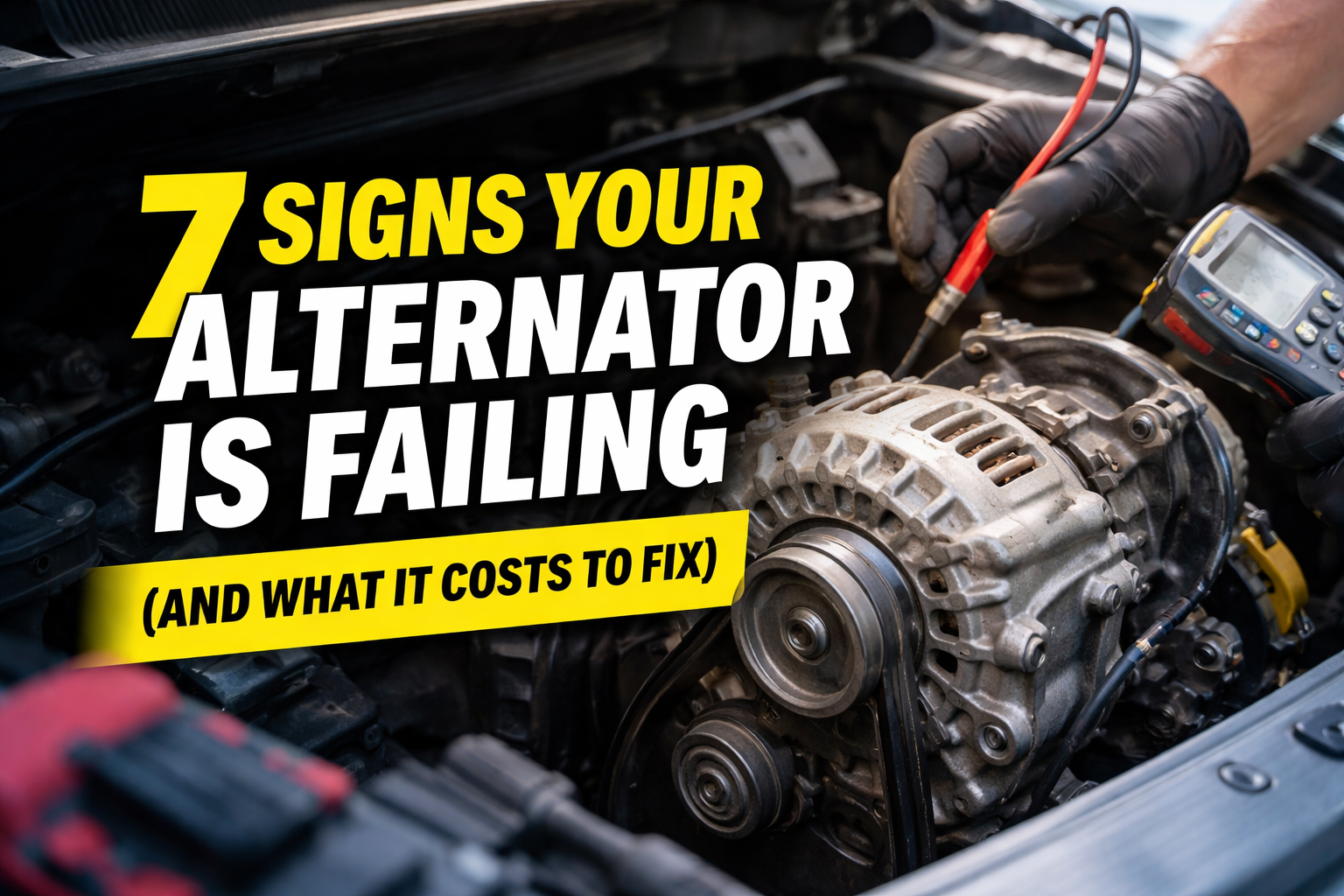
Your car’s alternator is one of the most important components under the hood. While the battery provides the power needed to start the engine, the alternator keeps the entire electrical system running once the vehicle is on the road. When an alternator begins to fail, drivers often notice electrical problems long before the car stops running completely. Recognizing these early warning signs can prevent a sudden breakdown and allow drivers to replace the part before it causes more serious issues.
A failing alternator often causes symptoms such as dim headlights, electrical problems, a dead battery, dashboard warning lights, or unusual noises from the engine. Because the alternator powers the electrical system and charges the battery, failure can quickly leave a vehicle unable to start or run properly.
7 Signs Your Alternator Is Failing
1. Dim or Flickering Headlights
One of the earliest signs of alternator trouble is dim headlights. Because the alternator powers the electrical system, weak output can cause lights to fluctuate in brightness.
2. Electrical Problems
Power windows, radio systems, dashboard displays, and interior lights may start malfunctioning when the alternator struggles to produce enough power.
3. Dead Battery
A bad alternator often causes the battery to lose charge repeatedly. If you replace a battery and the new one dies quickly, the alternator may be the real problem.
4. Dashboard Warning Light
Many vehicles display a battery or charging system warning light when the alternator stops producing sufficient voltage.
5. Strange Noises
Grinding or whining noises from the front of the engine can indicate worn alternator bearings.
6. Burning Smell
Overheating alternator components or worn wiring can sometimes produce a burning smell from the engine compartment.
7. Engine Stalling
If the alternator fails completely, the vehicle may stall because the electrical system can no longer power essential components.
Mechanic Insight Section
Professional mechanics often point out that alternators typically last 100,000 to 150,000 miles. Heat, vibration, and worn bearings eventually cause internal components to fail. Regular inspection of belts and charging systems can extend alternator life and prevent sudden failures.
Practical Advice Section
Drivers who suspect alternator problems should:
- Check battery voltage with a multimeter
- Inspect the serpentine belt for wear
- Watch for dashboard warning lights
- Test the charging system
If the alternator is failing, replacing it early can prevent damage to the battery and other electrical components.
FAQ
How long do alternators last?
Most alternators last between 100,000 and 150,000 miles.
Can you drive with a bad alternator?
Driving with a failing alternator is risky because the battery will eventually lose power.
How much does an alternator replacement cost?
Alternator replacement typically costs between $400 and $900 depending on the vehicle.