
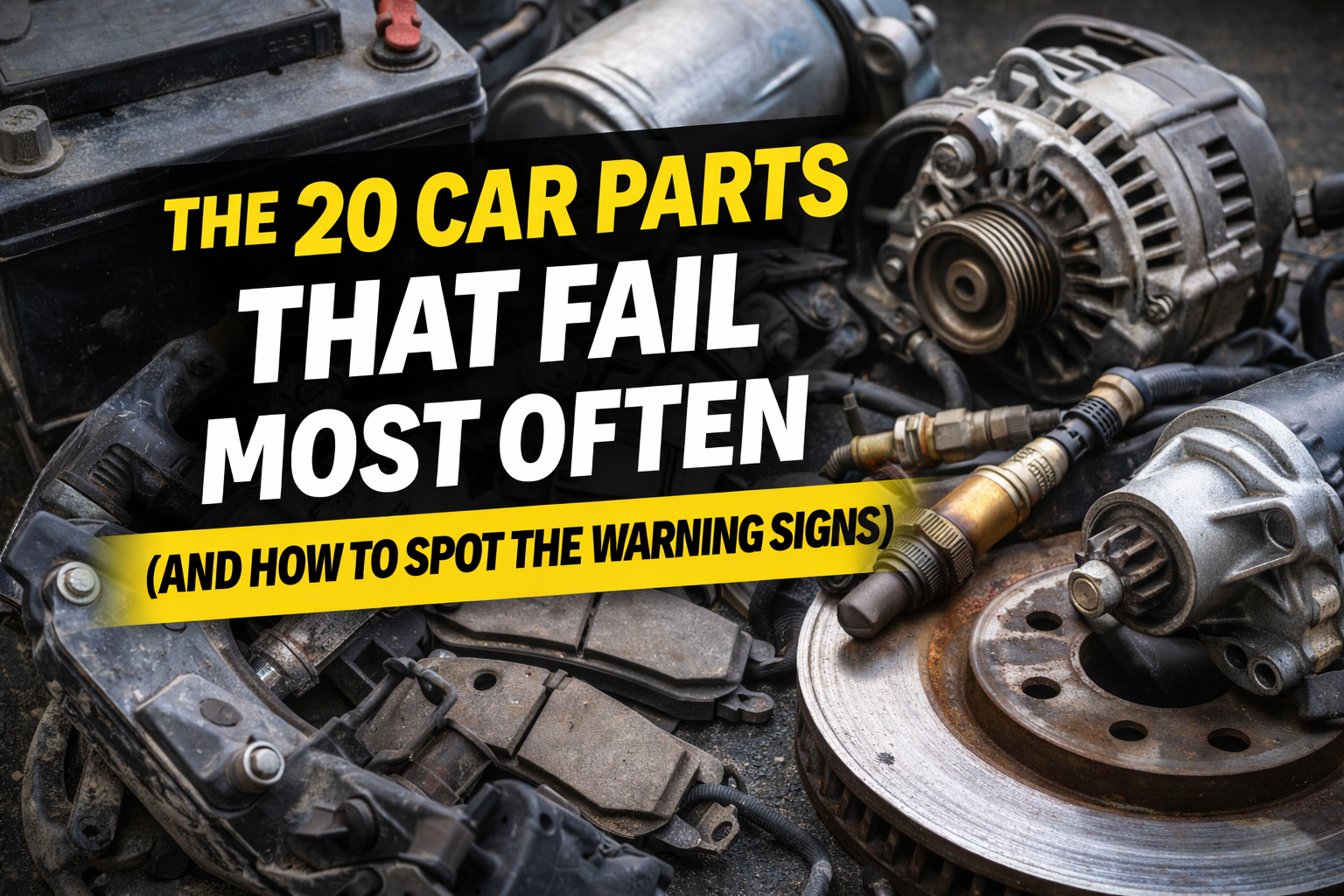
Modern vehicles are engineering marvels, capable of running for hundreds of thousands of miles with proper maintenance. However, even the most reliable cars contain parts that naturally wear out over time. Components like sensors, pumps, electrical systems, and suspension parts experience constant stress during daily driving.
When these parts begin to fail, they usually provide warning signs before a complete breakdown occurs. Recognizing these early symptoms allows drivers to fix problems before they become expensive repairs.
Below are 20 car parts that fail most often—and the warning signs every driver should know.
Quick Answer
The car parts that fail most often include alternators, starter motors, oxygen sensors, water pumps, fuel pumps, spark plugs, and wheel bearings. These components wear out due to heat, vibration, and normal vehicle operation, making them some of the most common causes of repairs and breakdowns.
The 20 Car Parts That Fail Most Often
1. Alternator
The alternator generates electrical power for your vehicle and keeps the battery charged while the engine runs.
Warning signs include:
- dim or flickering headlights
- dead battery
- electrical system problems
A failing alternator can quickly leave a vehicle unable to start.
2. Starter Motor
The starter motor turns the engine when you turn the key or press the start button.
Common symptoms include:
- clicking noise when starting
- engine won’t crank
- intermittent starting problems
Starter motors typically fail after many years of repeated use.
3. Oxygen Sensors
Oxygen sensors monitor the air-fuel mixture in the engine.
Signs of failure include:
- check engine light
- reduced fuel efficiency
- rough engine performance
These sensors are one of the most common reasons for a check engine light.
4. Fuel Pump
Fuel pumps deliver gasoline from the tank to the engine.
Warning signs include:
- loss of power during acceleration
- engine sputtering
- difficulty starting the car
A failing fuel pump can eventually prevent the engine from starting.
5. Water Pump
The water pump circulates coolant throughout the engine to prevent overheating.
Symptoms include:
- coolant leaks
- overheating engine
- whining noises from the front of the engine
Water pump failure can cause severe engine damage if ignored.
6. Spark Plugs
Spark plugs ignite the air-fuel mixture inside the engine cylinders.
Signs of worn spark plugs include:
- rough engine idle
- poor fuel economy
- difficulty starting
Spark plugs are a routine maintenance item but often cause problems when neglected.
7. Ignition Coils
Ignition coils provide the high voltage needed for spark plugs to ignite fuel.
Common symptoms include:
- engine misfires
- reduced engine power
- check engine light
8. Wheel Bearings
Wheel bearings allow wheels to rotate smoothly with minimal friction.
Signs of failure include:
- humming or grinding noise while driving
- vibration in the steering wheel
- uneven tire wear
9. Brake Pads
Brake pads naturally wear out over time as they create friction to stop the vehicle.
Common signs include:
- squealing brakes
- grinding sounds
- reduced braking performance
10. Catalytic Converter
The catalytic converter reduces harmful emissions from the exhaust system.
Symptoms of failure include:
- loss of engine power
- sulfur smell from exhaust
- check engine light
11. Mass Airflow Sensor
This sensor measures the amount of air entering the engine.
Symptoms include:
- poor acceleration
- rough idle
- engine hesitation
12. Radiator
Radiators help keep the engine cool by dissipating heat from the coolant.
Signs of radiator problems include:
- coolant leaks
- overheating engine
- visible corrosion
13. Thermostat
The thermostat regulates coolant flow through the engine.
Signs of failure include:
- engine overheating
- temperature gauge fluctuations
- poor heater performance
14. Control Arms
Control arms connect the wheels to the vehicle’s suspension.
Symptoms include:
- clunking sounds while driving
- uneven tire wear
- poor steering stability
15. Tie Rod Ends
Tie rods connect the steering system to the wheels.
Signs of wear include:
- loose steering
- uneven tire wear
- vibration in the steering wheel
16. Fuel Injectors
Fuel injectors spray fuel into the engine cylinders.
Symptoms of failure include:
- engine misfires
- reduced fuel economy
- rough engine idle
17. Battery
Batteries provide power to start the engine and operate electrical systems.
Common warning signs include:
- slow engine crank
- electrical issues
- dim interior lights
18. Serpentine Belt
The serpentine belt powers many engine accessories.
Signs of failure include:
- squealing noises
- cracked or worn belt
- loss of power steering or charging system
19. Suspension Bushings
Bushings absorb vibrations between suspension components.
Symptoms include:
- squeaking noises
- poor ride comfort
- unstable handling
20. Exhaust Gaskets
Exhaust gaskets seal connections in the exhaust system.
Signs of failure include:
- loud exhaust noise
- exhaust leaks
- reduced engine performance
What Mechanics Say About Common Failures
Professional mechanics often point out that most vehicle breakdowns are caused by predictable wear items. Parts that experience constant heat, friction, or vibration will eventually wear out.
Many mechanics recommend regularly inspecting sensors, belts, cooling components, and ignition parts, especially after a vehicle reaches 100,000 miles.
Preventative maintenance is one of the best ways to extend vehicle lifespan and avoid unexpected repairs.
Tips for Preventing Unexpected Car Repairs
Drivers can reduce the risk of sudden breakdowns by following a few basic maintenance practices.
- Follow your vehicle’s recommended maintenance schedule
- Replace worn belts and hoses before they fail
- Pay attention to unusual sounds or warning lights
- Inspect suspension components regularly
- Address small problems before they become major repairs
Regular maintenance is far less expensive than dealing with emergency repairs.
Frequently Asked Questions
What car parts fail most often?
Commonly failing parts include alternators, starter motors, oxygen sensors, fuel pumps, water pumps, spark plugs, and wheel bearings.
What parts wear out after 100,000 miles?
Suspension components, sensors, ignition parts, and cooling system components commonly fail after vehicles reach 100,000 miles.
Can worn car parts cause engine damage?
Yes. Ignoring failing components such as water pumps, cooling systems, or ignition parts can lead to more serious engine damage.
How can drivers prevent unexpected breakdowns?
Routine maintenance and early diagnosis of warning signs are the best ways to prevent sudden vehicle failures.
Conclusion
While modern vehicles are capable of lasting longer than ever, every car eventually experiences wear and tear. Recognizing the warning signs of failing components can help drivers address problems early and avoid costly breakdowns.
By understanding which parts fail most often—and watching for early symptoms—drivers can keep their vehicles running reliably for many years.