

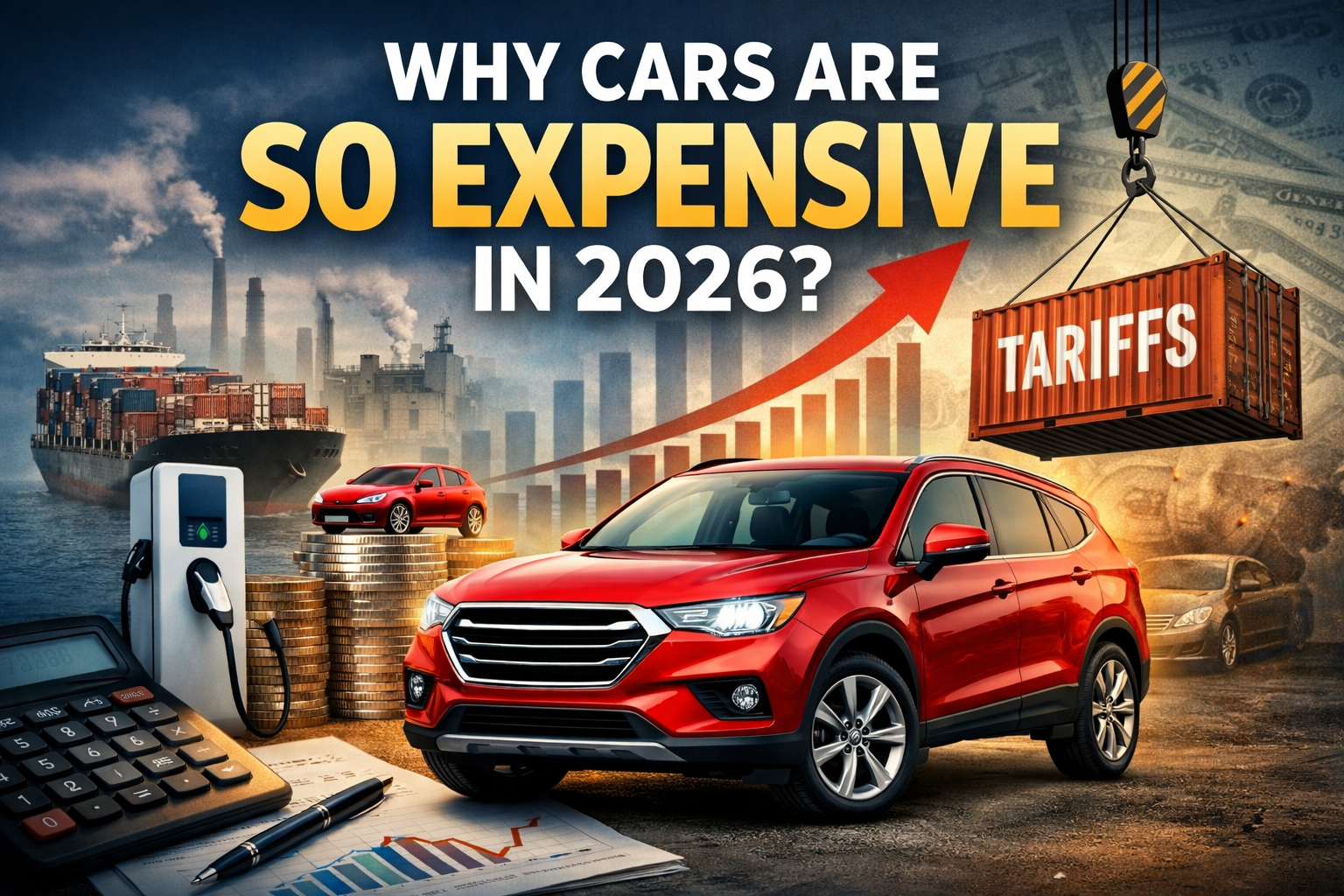
The real reasons behind rising vehicle prices—and what buyers can do about it
If you’ve shopped for a vehicle recently, you’ve probably experienced sticker shock. The average price of a new car in the United States is hovering around $47,000, a dramatic increase from the mid-$30,000 range just a few years ago. Many consumers are asking the same question: Why have cars become so expensive so quickly?
The answer isn’t a single cause. Instead, it’s the result of several structural changes happening simultaneously across the global automotive industry. Supply chain disruptions, new technologies, shifting consumer demand, government policies, and evolving business models are all reshaping how vehicles are built and priced.
Understanding these factors helps explain why the cost of cars is rising—and why it may stay elevated for years to come.
1. The Shift Toward Higher-End Vehicles
One of the biggest changes in the automotive industry is what automakers choose to build. Over the past decade, manufacturers have increasingly prioritized higher-margin vehicles such as SUVs, luxury trims, and performance models.
Why? Because they are far more profitable.
A compact sedan might generate only a few thousand dollars in profit, while a fully loaded SUV or pickup truck can generate two to five times as much profit per vehicle. As a result, many automakers have quietly phased out lower-cost models and focused their production capacity on premium vehicles.
This strategy makes financial sense for manufacturers, but it means consumers have fewer affordable options than they once did.
Many entry-level cars that used to start around $18,000–$20,000 have disappeared entirely. In their place are crossovers and SUVs that begin closer to $30,000.
2. Electric Vehicle Development Costs
The transition toward electric vehicles (EVs) is another major contributor to rising car prices.
Automakers are investing hundreds of billions of dollars into EV development. These investments include:
-
New battery factories
-
EV platform engineering
-
Charging infrastructure partnerships
-
Advanced software systems
-
Autonomous driving research
These costs must eventually be recovered through vehicle sales.
Even though battery costs have declined over the past decade, EVs are still more expensive to produce than comparable gasoline vehicles. Battery packs remain the most costly component in an electric car, often representing 30–40% of the vehicle’s total production cost.
Because of this, many electric vehicles enter the market at higher price points. While tax incentives may reduce the purchase price for some buyers, the underlying production costs remain significant.
3. Supply Chain Disruptions and Global Shortages
The global supply chain has been under pressure since the early 2020s, and the automotive industry has been particularly affected.
Vehicles today require thousands of components sourced from dozens of countries. When disruptions occur—whether from geopolitical tensions, trade policies, or manufacturing delays—the entire production system can slow down.
One of the most well-known examples was the semiconductor shortage, which forced automakers to temporarily halt production of millions of vehicles. Even after the worst shortages passed, the industry learned an important lesson: supply chains are fragile.
To reduce risk, many manufacturers are now diversifying suppliers and building redundancy into their supply networks. While this strategy improves resilience, it also increases costs.
Higher costs ultimately translate into higher vehicle prices for consumers.
4. Tariffs and Trade Policies
International trade policies also play a role in vehicle pricing. Tariffs on imported vehicles and parts can significantly increase manufacturing costs.
Modern vehicles often contain parts sourced from multiple countries. Even if a car is assembled domestically, many of its components—such as electronics, sensors, or drivetrain parts—may come from overseas suppliers.
When tariffs are applied to those components, the cost of production increases. Automakers typically pass at least part of these costs along to buyers through higher vehicle prices.
Trade policies designed to encourage domestic manufacturing can sometimes achieve that goal, but they may also contribute to short-term price increases in the market.
5. Software and Technology Integration
Cars today are far more technologically advanced than vehicles from even ten years ago. Modern vehicles include features that were once found only in luxury models:
-
Advanced driver-assistance systems
-
Large touchscreen displays
-
Over-the-air software updates
-
Smartphone connectivity
-
Digital instrument clusters
-
AI-assisted safety features
These technologies require powerful processors, sophisticated sensors, and complex software development.
Many automakers now describe their vehicles as “software-defined cars.” This means the vehicle’s capabilities can evolve through updates, similar to how smartphones receive new features over time.
However, building this type of platform requires extensive engineering and cybersecurity infrastructure, which adds to development costs.
While these features improve safety and convenience, they also contribute to the higher base price of modern vehicles.
6. Consumer Demand for Larger Vehicles
Another reason car prices have risen is that consumers increasingly prefer larger vehicles.
SUVs and trucks now dominate the market in North America. These vehicles are more expensive to build because they use more materials, larger engines or battery packs, and more complex suspension systems.
Consumers often choose these vehicles for practical reasons such as cargo space, ride height, or perceived safety. But the shift toward larger vehicles naturally raises the average price of cars sold.
If the majority of vehicles sold are larger and more feature-rich than in previous decades, the average transaction price will rise accordingly.
7. Dealer Markups and Market Dynamics
During periods of high demand and limited inventory, dealerships may add market adjustment fees to vehicle prices. These markups became especially common during the supply shortages of the early 2020s.
While the practice has become less widespread as production improves, certain popular models still command premiums above their suggested retail price.
Limited-production vehicles, performance models, and newly released EVs are particularly likely to see dealer markups.
This dynamic further contributes to the perception that vehicles have become dramatically more expensive.
8. Financing and Interest Rates
Even when vehicle prices remain stable, the cost of ownership can rise if financing becomes more expensive.
Interest rates have increased significantly compared with the ultra-low rates available earlier in the decade. As a result, monthly payments for auto loans have climbed.
For example, a vehicle financed at a higher interest rate may cost hundreds of dollars more per month than the same vehicle financed at a lower rate just a few years ago.
This change has made affordability a growing concern for many buyers.
What This Means for Car Buyers
Despite rising prices, consumers still have options for managing the cost of vehicle ownership.
Here are several strategies that buyers are using today:
1. Consider lightly used vehicles
The used-car market remains strong, but buying a vehicle that is one or two years old can still provide significant savings compared with purchasing new.
2. Explore hybrid options
Hybrid vehicles often offer improved fuel efficiency without the higher purchase price of fully electric vehicles.
3. Compare trims carefully
Many vehicles offer multiple trim levels. Choosing a mid-level trim instead of the top model can save thousands of dollars while retaining most key features.
4. Shop across multiple dealerships
Prices and fees can vary significantly between dealerships. Comparing offers can help buyers avoid unnecessary markups.
5. Evaluate total cost of ownership
Fuel efficiency, insurance costs, maintenance, and resale value all affect the long-term cost of a vehicle.
The Future of Car Prices
Will cars become more affordable again?
The answer depends on several factors. Battery technology improvements may gradually reduce EV costs. Supply chains may stabilize, allowing automakers to increase production. Competition from new manufacturers—especially global EV startups—could also push prices downward.
At the same time, vehicles are becoming more technologically advanced and software-driven, which may continue to keep prices elevated.
In other words, the automotive market is undergoing a major transformation. Cars are no longer just mechanical machines; they are increasingly complex digital platforms.
This transformation brings remarkable innovation—but it also changes how vehicles are priced.
For buyers navigating today’s market, understanding these forces is the first step toward making a smart purchase decision.